
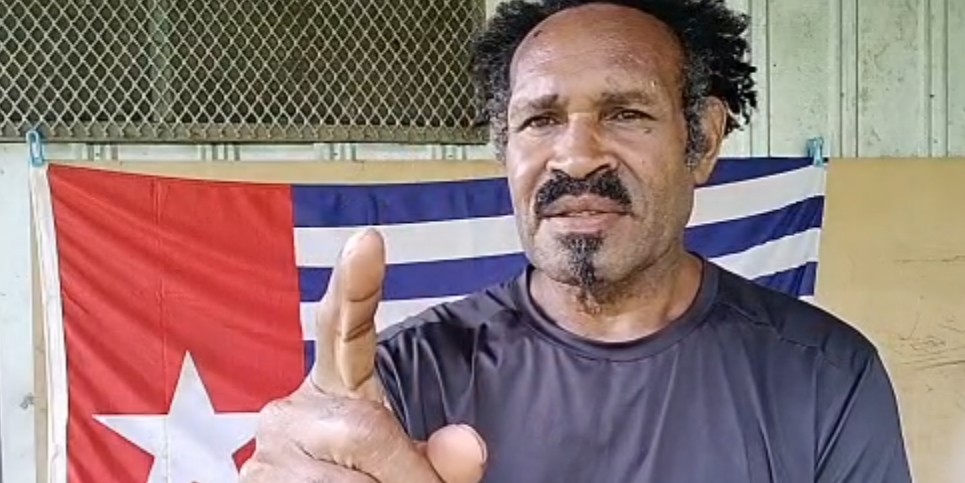

PAPUA – The National Command of the West Papua National Liberation Army (TPNPB) issued a firm statement rejecting the presence of Indonesian immigrants and the political status of Papua. TPNPB stated that the presence of Indonesia on Papuan land is a form of illegal occupation that has lasted for decades through military invasion.
"We until this day for 64 years do not recognize the existence of Indonesia in Papua, and we strongly believe that the existence of Indonesian immigrant people in Papua is illegal," said Sebby Sambom, Friday (22/5/2026).
TPNPB considers that the occupation is rooted in past history when the People's Triple Command was proclaimed in Yogyakarta on 19 November 1961. That military step was then followed by the entry of armed forces into the West Papua region starting on 1 May 1963. This historical event is viewed as the beginning of the deprivation of sovereign rights, including the political right to self-determination for the indigenous people.
"The definition of the word illegal occupation is taking over the rights or territory of other people by force through military invasion," stated Sebby.
The rejection of Indonesia's presence is based on international law arguments regarding the human rights of a nation to be sovereignly independent. TPNPB refers to global provisions where every nation has a guaranteed right to determine their own destiny without foreign intervention. This political right to independence is considered to have been plundered, thereby triggering resistance that continues to this day to defend identity and ancestral land.
"Plundering rights includes the political right to independence of the Papuan nation which is guaranteed by the International Covenant article 3 which states that everyone has the right to obtain independence," said Sebby.
In the explanation, TPNPB rejects the narrative that separates civilian immigrants from government-formed security forces. All immigrant citizens who come and work in various professional sectors in Papua are viewed as an inseparable part of the occupation strategy. Professions such as traders, teachers, medical assistants, civil servants, to field workers are considered to carry a hidden mission to control the living space of the indigenous people.
"Papuan people and the world need to know that the meaning of the word illegal occupation is that the nation already had a government and high authority to control its territory but was plundered," said Sebby.
The condition is assessed to have a direct impact on the systematic marginalization of indigenous Papuans in various aspects of life on their own land.
TPNPB also views that the massive influx of outside population aims to erode demographic dominance and destroy the physical and mental character of the indigenous community. This situation places civil society in a secondary position on the land that their ancestors have inhabited since thousands of years ago.
"Indonesian immigrant people who come to Papua, women, men, old, young, youth and others are they are part of the Indonesian Security Forces," emphasized Sebby.
The hard stance of TPNPB also targets natural resource exploitation activities, such as illegal gold mining in forest areas that damages the traditional ecosystem. The unauthorized mining is viewed as the theft of natural wealth that should be passed down to future generations in accordance with customary values. Armed conflicts that frequently occur in the inland areas are often triggered by the struggle for control over these mineral-rich territories.
"They come completely in various fields becoming traders, becoming teachers, becoming medical assistants, becoming civil servants to take over the rights of the indigenous Papuan people," said Sebby.
Meanwhile, tensions on the ground continue to rise along with mutual accusations regarding the mastermind behind the deaths of a number of residents in the conflict areas. The Indonesian National Armed Forces (TNI) and the Indonesian National Police frequently refer to the residents who became victims as pure civilians. However, TPNPB strongly rejects that labeling and states that all elements of immigrants who do not support independence are targets of cleansing operations.
"We as residents, indigenous people, indigenous people, we have the right to defend ourselves, defend our people, defend our land," stated Sebby.
Elsewhere, human rights defenders and local church institutions continue to call for a cessation of violence and promote peaceful dialogue to resolve the Papua conflict.
Humanitarian observers even assess that this escalation has the potential to increase security risks for development program workers in the inland areas. On the other side, TPNPB emphasizes they will not back down and are ready to bring the accountability of this entire conflict dynamic before international law.
"There are no civilians here, all of them are an inseparable unit of the Indonesian military strength to steal and take over the rights of the indigenous Papuan people," said Sebby.
TPNPB also gives a warning to indigenous Papuan people not to get trapped in a passive mindset that sacrifices the future of the nation. Local residents are asked to unite and fully support the movement to save land rights and prevent the occurrence of ethnic extinction. Protection support will only be given to immigrant residents who openly side with the political agenda of West Papua independence.
"You Indonesian people, if you want to become citizens of Papua and support West Papua Independence, we will protect you," said Sebby.
The conflict in Papua indeed has been going on for a long time since 1969. The United Nations participates in monitoring the development of the humanitarian situation in this region which continues to be marked by displacement due to armed contact. TPNPB even states readiness to face international justice to prove the legality of the armed struggle carried out on Papuan land. (One Papua)