
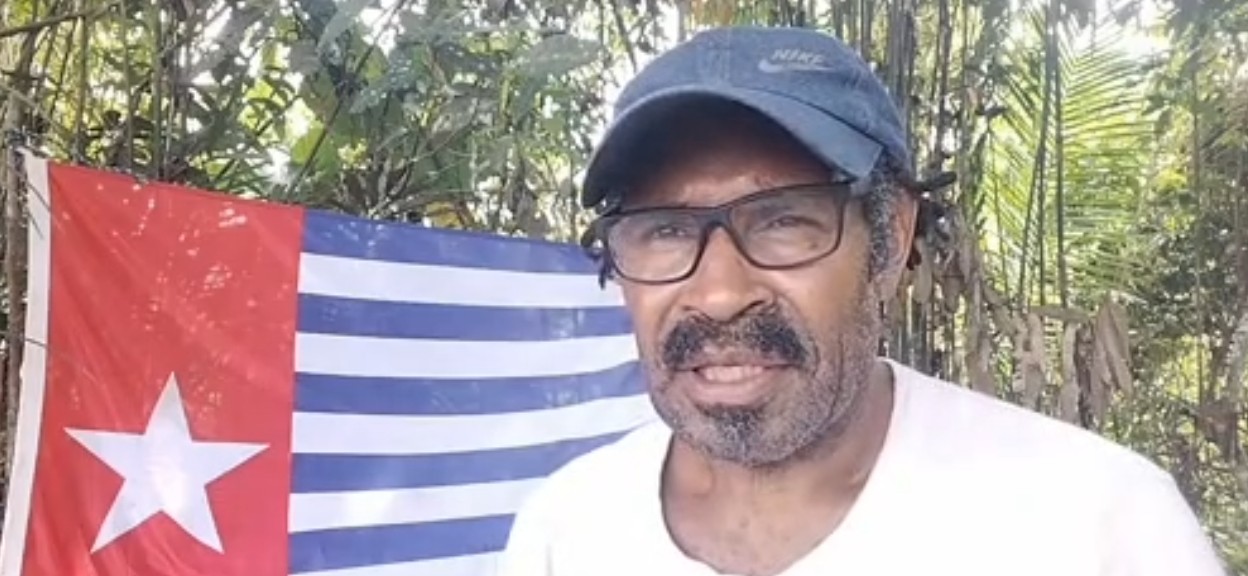

Addressing the roots of Papua's political catastrophe, the lawsuit before the International Court of Justice, and sharp criticisms of social dynamics in the ancestral land.
August skies in Papua are rarely free of tension whenever the calendar reaches the number 17. Amidst the fanfare of the Independence Day celebrations of the Republic of Indonesia—commemorated every mid-month—a fiery voice echoes from the headquarters of the National Command of the West Papua National Liberation Army (TPNPB). It is Sebby Sambom, the spokesperson who consistently serves as the primary mouthpiece of the TPNPB, appearing to summarize a long record of historical pages, social protests, and the strategy of juridical resistance that he terms "legal bullets."
For Sebby, the momentum of August—particularly August 15, which marks the signing of the 1962 New York Agreement—is not a chapter of victory, but rather the starting point of catastrophe for indigenous Papuans. With a candid, straightforward, and collectively emotional speaking style, he asserts that the people of Papua demand justice from the nations and global institutions deemed responsible for the fate of the Papuan people in the past: Indonesia, the Netherlands, the United States, and the United Nations (UN).
"They sold us like animals to the Indonesian people," Sebby declared in his notes, reflecting the anger of the young generation of Papua who now hold the baton of the struggle.
He points to academic arguments frequently voiced by historical researchers, including references to the works of British academic Dr. John Saltford and Prof. Turok Lefebvre in their book Enemies of Progress.
Based on UN archival research, Indonesia's claims of sovereignty over Papua are frequently pitted against the narrative that the UN has validated the process. Yet, according to official archival investigations, the UN General Assembly at that time never absolutely ratified the results of the Act of Free Choice (Pepera) of 1969; rather, it merely held the status of "take note"—recording that the mechanism was flawed and far removed from the universal principle of One Man, One Vote.
Sebby brought up how the UN General Assembly in November 1969 experienced delays due to fierce protests from the bloc of African and Caribbean nations under the leadership of Gabon and Gambia. Those protests were launched after hearing the report of UN envoy Ortiz Sanz, who directly witnessed how the implementation of Pepera ignored the democratic principles agreed upon in the New York Agreement. Instead of involving hundreds of thousands of people's voices, the process merely reduced political rights into the ranks of hundreds of appointed individuals.
It is here that the TPNPB seeks to alter its strategic direction. Armed resistance is now combined with international juridical diplomacy steps. Sebby displayed a thick document consisting of 34 pages, which was reportedly prepared since June 11, 2021. That document, he stated, was prepared as legal ammunition to drag Indonesia to the International Court of Justice. The document is planned to be collaborated with an international legal counsel team to challenge the validity of the historical annexation process as well as the actions of the United Nations Temporary Executive Authority (UNTEA), which was deemed to have hastily handed over the territory of Papua.
Yet, beyond the courtroom battles and the narrative of historical archives, Sebby also highlighted social clashes that are increasingly sharpening at the grassroots level. He launched harsh condemnations against the prevalence of bullying, terror, and insults on social media directed at Papuan fighters as well as students pursuing education in various study cities outside Papua, such as Makassar. According to him, the slanted narratives demeaning the intellect of Papuan fighters represent a disregard for the reality that many of them are educated individuals who choose to cast aside the comforts of life for the call of conscience.
That tension became increasingly layered when Sebby touched upon recent events in the land of Papua, ranging from civilian shooting incidents, counter-demonstrations by the Red and White Barisan group—which he likened to the dynamics of past militias in East Timor—to the forced imposition of Indonesian attributes in public spaces. He even highlighted the dilemma-ridden position of State Civil Apparatus (ASN) members, regents, governors, and indigenous Papuan village heads who are frequently caught between structural bureaucratic pressures and cultural loyalties toward the ancestral land of Papua.
For Sebby and the TPNPB, today's resistance is no longer merely the echo of the older generation who forged paths in the wilderness decades ago. That baton now rests in the hands of the third and fourth generations—a generation more adept at reading the loopholes of international law, yet maintaining the embers of resistance inherited down through generations.
Amidst the noisy celebrations of Indonesia's independence in Jakarta and major cities, this voice from the TPNPB headquarters serves as a sharp reminder that the embers of conflict in the land of Papua still leave behind unraveled historical issues and unfulfilled justice. (One Papua)