
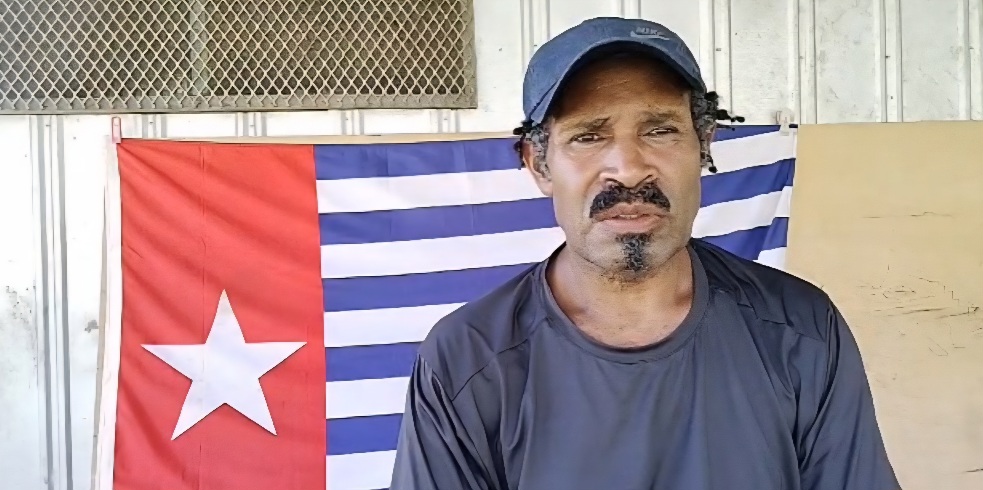

PAPUA — The National Command of the West Papua National Liberation Army again issued an open statement regarding the policies of the government of the Republic of Indonesia. Through an official press release issued on Wednesday, August 5, 2026, the Spokesperson for the TPNPB Central Headquarters Management, Sebby Sambom, firmly urged that the free nutritious meals program initiated by the administration of President Prabowo Subianto be immediately disbanded, particularly in the region of Tanah Papua.
In a statement delivered to the wider public, Sebby assessed that the policy of providing free nutritious meals has the potential to bring negative impacts and poisoning to society, both in Indonesia and among Indigenous Papuans (OAP).
"Since the very first time the colonizing president, President Prabowo Subianto, announced the free nutritious meals, the very first person who said that it was poisonous food was me," Sebby stated in his remarks.
He added that the TPNPB views the program not as a form of welfare, but as a part of long-term concern regarding the health of the young generation of Papua.
According to Sebby, what he has voiced so far is not an empty view, but a form of warning over various incidents of mass poisoning occurring in a number of regions outside Papua, such as East Nusa Tenggara (NTT), Java, Sumatra, Sulawesi, and beginning to spread to the Tanah Tabi region. Sebby stated that the program could affect the growth and development as well as the intellectual capacity of the younger generation of Papua if continuously implemented without strict supervision over its quality and safety standards.
Aside from highlighting the government's health program, Sebby also touched upon the internal socio-political dynamics in Papua. He launched sharp criticism toward a number of public figures from Papua who take a moderate path or cooperate with the central government, including mentioning the figure Lenis Kogoya. In his narrative, Sebby recalled the past when both of them once pursued theological studies together in Jakarta, before finally taking opposing paths of struggle. He assessed that figures involved in the bureaucracy or the structures of the colonial government have lost their ideological orientation for the sake of worldly interests.
Amidst living conditions that he described as full of simplicity and physical challenges at the TPNPB Central Headquarters, Sebby emphasized that he remains steadfast in holding to the ideology of Papuan independence referring to the declaration of December 1, 1961. He stated that his life choice is to leave behind all forms of worldly pleasures and position himself as a servant for the grassroots society in the land of Papua.
Concluding his statement, Sebby once again called upon all people in Papua to remain critical toward various forms of assistance or social programs from the central government.
He asserted that the political and ideological struggle of the TPNPB to separate from the sovereignty of the Republic of Indonesia will continue to be voiced through various communication channels, regardless of the various welfare development programs currently being promoted by the government of Indonesia. (One Papua)